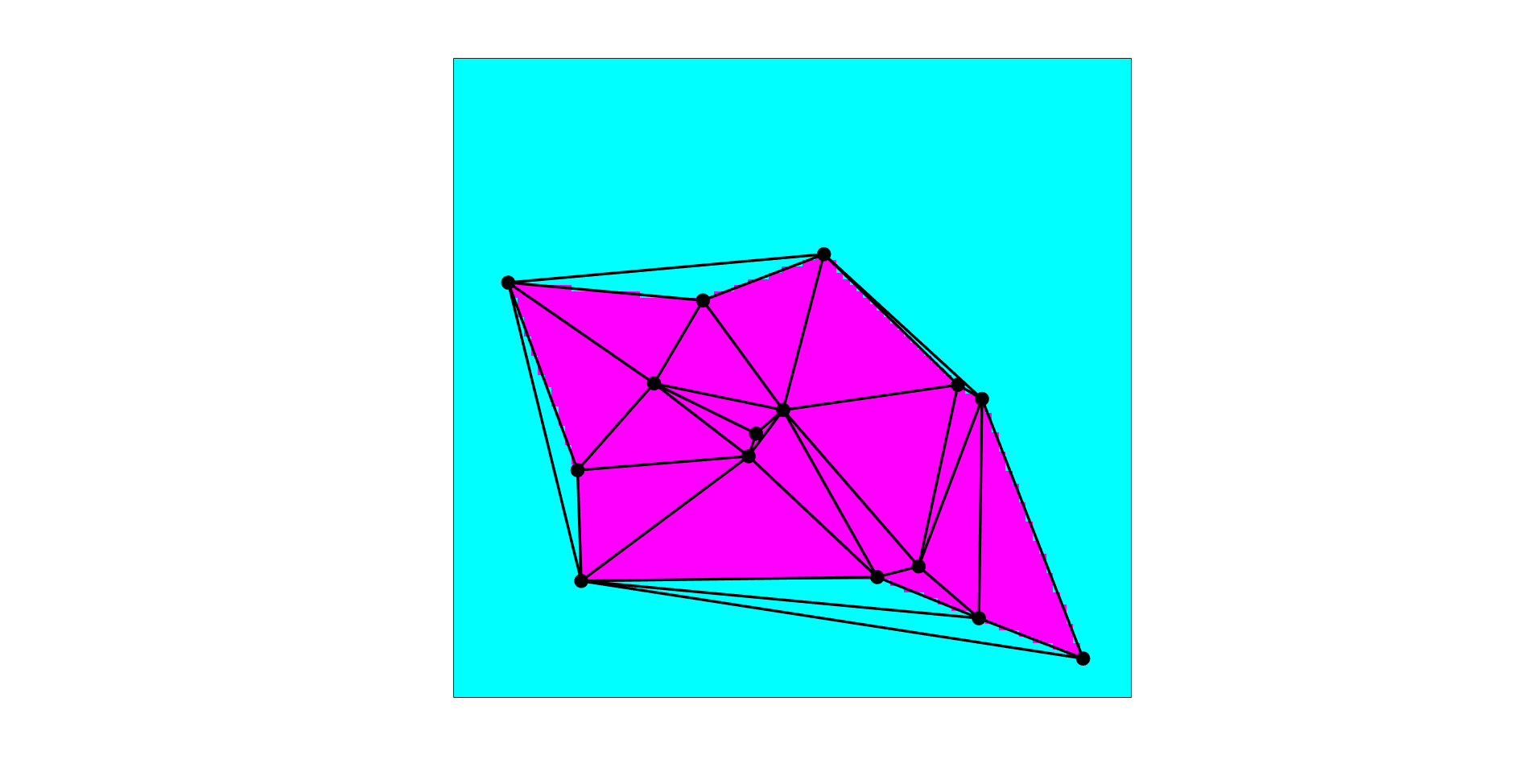
Alpha Shape Boundary Modeling
Learning flexible convex and concave boundaries when the geometry of a shape is not known in advance.
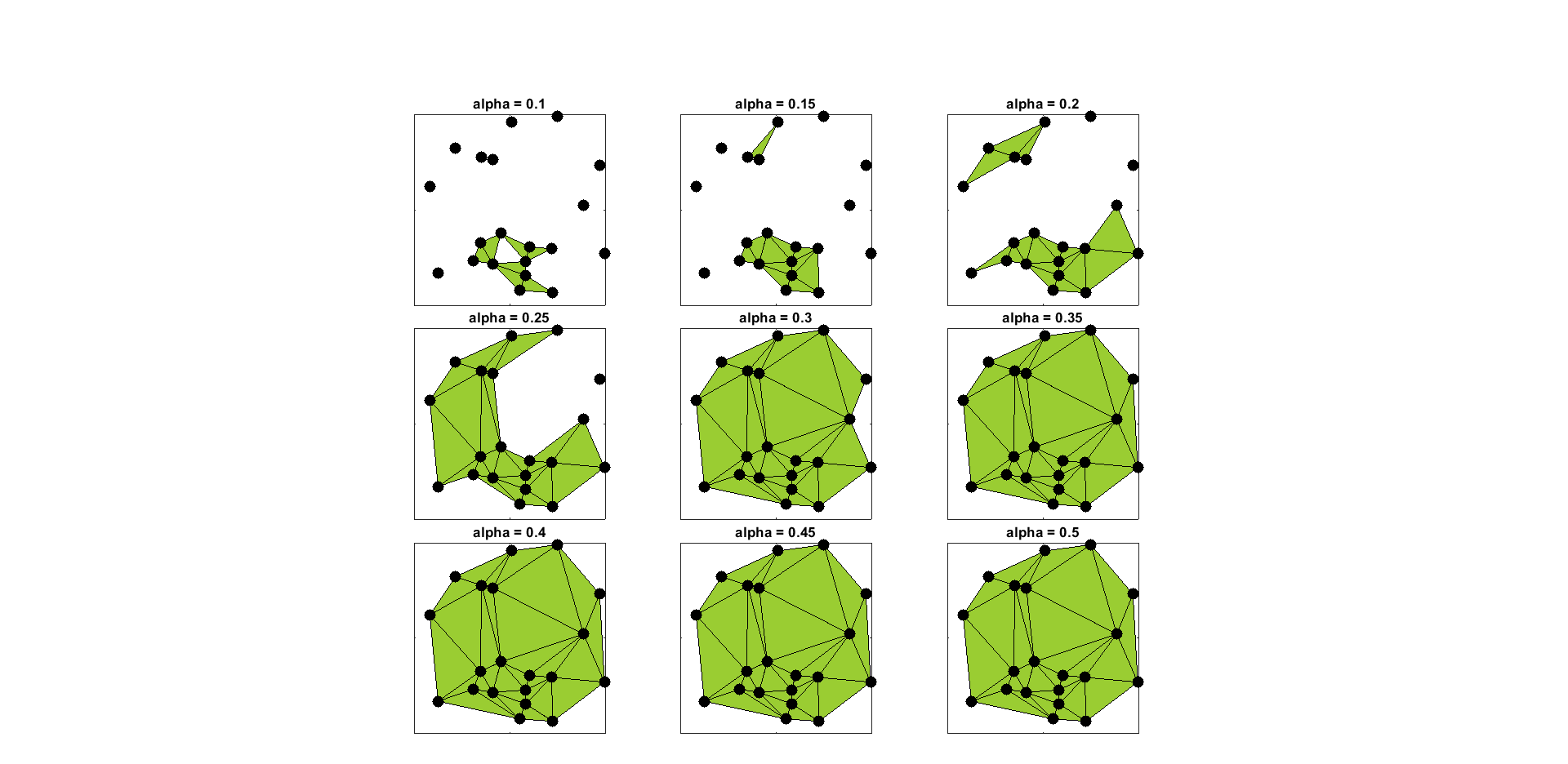
Alpha shapes extend the idea of a convex hull by allowing the boundary of a point set to bend inward and represent concavity. This makes them useful when a simple outer envelope is too coarse and the data suggest a more intricate geometry. The alpha parameter controls how tightly the boundary follows the points.
In this work, I treated the alpha parameter as part of the modeling problem rather than as a fixed visualization setting. That creates a more objective, data-driven approach to boundary extraction, especially when it is unclear whether the target geometry should be represented as mostly convex, strongly concave, or somewhere in between.
Alpha-shape methods are relevant in computational geometry, geospatial analysis, and segmentation-style problems where the boundary matters as much as the interior. This project connects directly to my broader interest in adaptive representations that let data determine model complexity rather than imposing geometry too early.